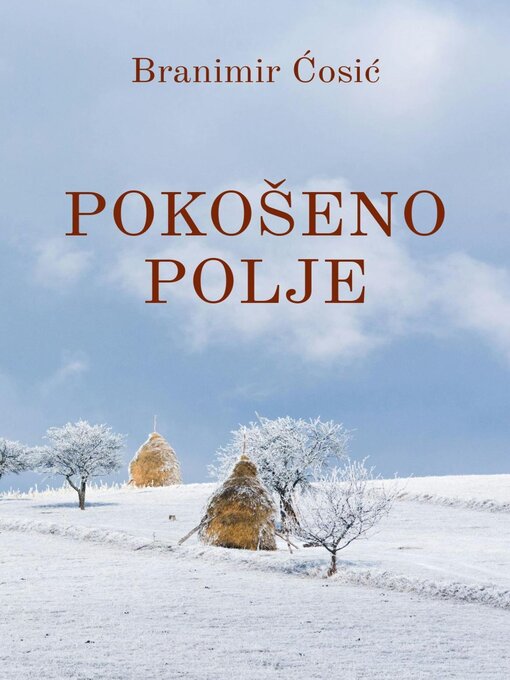
Roman Pokoseno polje (1933) najznacajnije je delo Branimira Cosica. Ovo je ujedno i njegovo poslednje napisano delo. Dovrseno je svega pet meseci pre pisceve smrti u sanatorijumu u kome se lecio od tuberkuloze. Roman pripada epohi urbanog, modernog realizma medjuratne knjizevnosti i protkan je naglasenom osecajnoscu prema zivotu obespravljenih ljudi tokom i u periodu posle Velikog rata. Sastoji se iz dva dela - u prvom, koji je svojevrsna autobiografija, pisac kroz lik glavnog junaka prisa o svom ratom unistenom detinjstvu i porodici, dok u drugom, takodje kroz svojevrsni autobiografski pristup, daje sliku drustvenih odnosa i zivota onoga vremena sa snaznim kritickim osvrtom na drustvene nepravde i nemoralnost ondasnjih elita.
——-
Pokoseno polje (The Mown Field) is Branimir Cosic's final-and finest-novel, a modern realist portrait of a generation coming of age in the ruins of the Great War. Told with understated lyricism and moral clarity, the book follows a young man whose childhood and family are scythed down by history. In one movement, the novel gathers the intimate textures of memory-hunger, shame, a mother's endurance; in another, it opens out to a city wrestling with poverty, graft, and the fragile hope of rebuilding. Cosic writes without spectacle: small scenes carry the weight of an era, and compassion sharpens into critique. For readers of Balzac and Remarque alike, this is a quietly devastating classic of Serbian interwar literature, newly accessible to a global audience.